Qianhong Lin
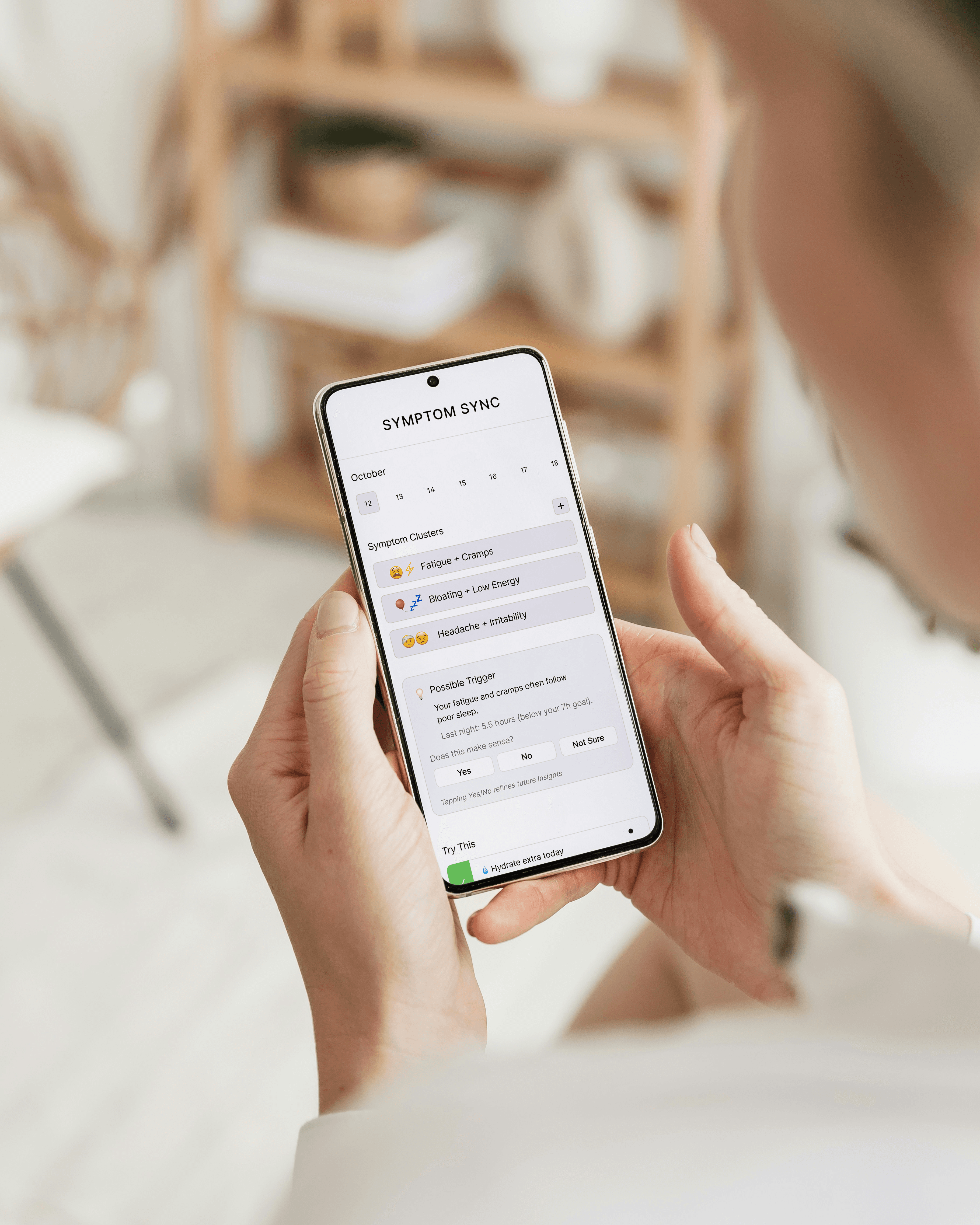
Symptom Sync is a two‑month Master’s project in Data‑Driven Design about how menstrual health apps can better support people with irregular cycles. Using the Double Diamond process, I examined why many current tools fail these users and designed a concept that prioritises personalisation, user control and transparent data use.
Client:
Fictional
My Role:
Data-Driven Product Designer
Timeline:
Oct 2025
Service Provided:
UX/UI Design, Ethical Design, Data studies, user research
Problem
Most period‑tracking apps are built around a regular 28‑day cycle. Their rigid algorithms, generic advice and dense dashboards work poorly for people with irregular cycles or conditions like endometriosis. In interviews and desk research, I saw recurring issues: inaccurate predictions that ignore irregular patterns, overwhelming charts that offload interpretation to the user, and one‑size‑fits‑all tips that feel irrelevant or even harmful.
Research 
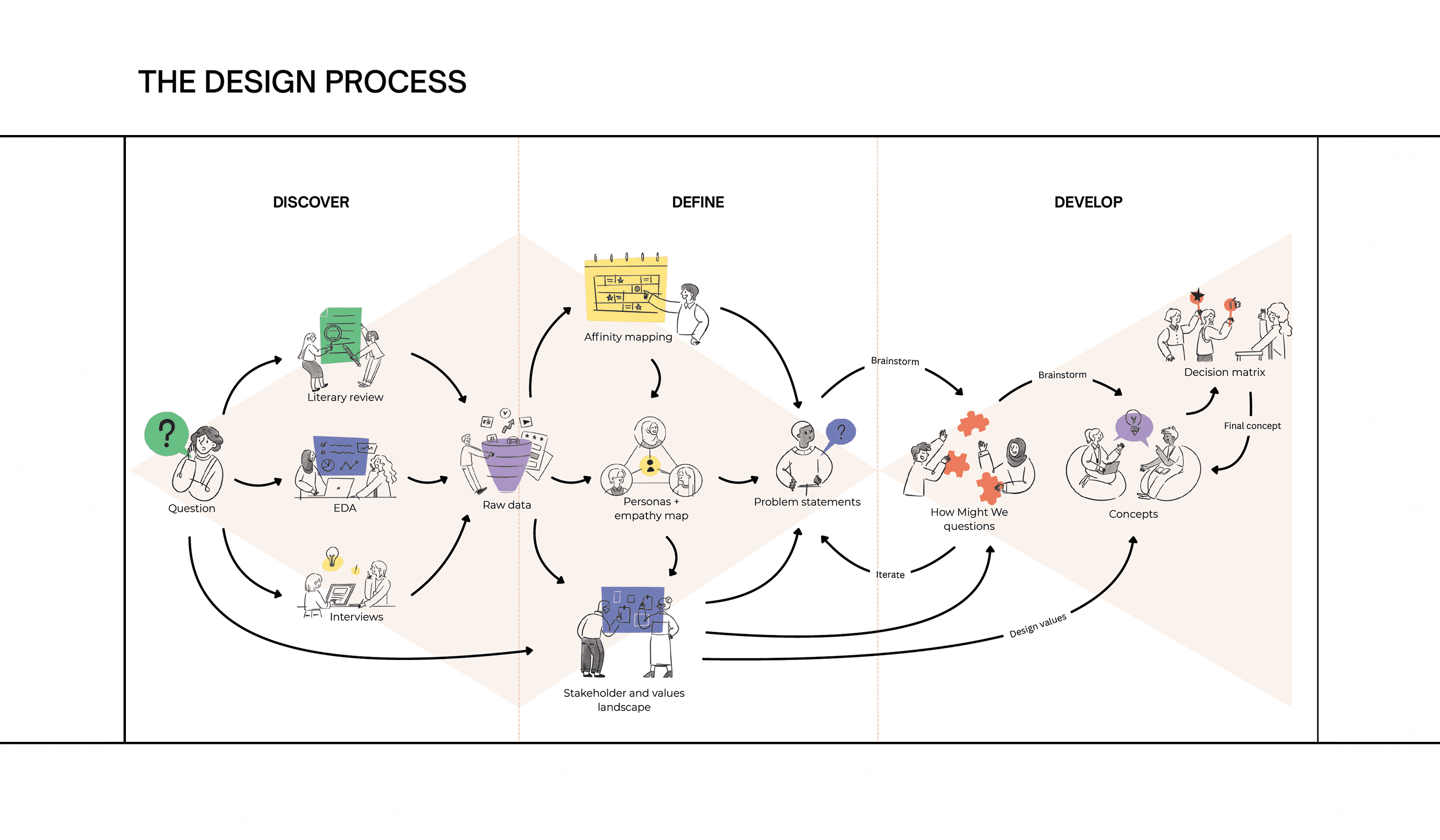
Over a two‑month Master’s project in Data‑Driven Design, I followed the Double Diamond framework with a strong focus on Discover and Define. I reviewed existing menstrual health apps, conducted interviews with people who experience irregular cycles, and mapped their journeys to understand where current tools break down. From this, I identified problem themes around trust, relevance and cognitive load, and defined principles such as “irregular by default”, “show your reasoning” and “support decisions, not just logging”.
Solution
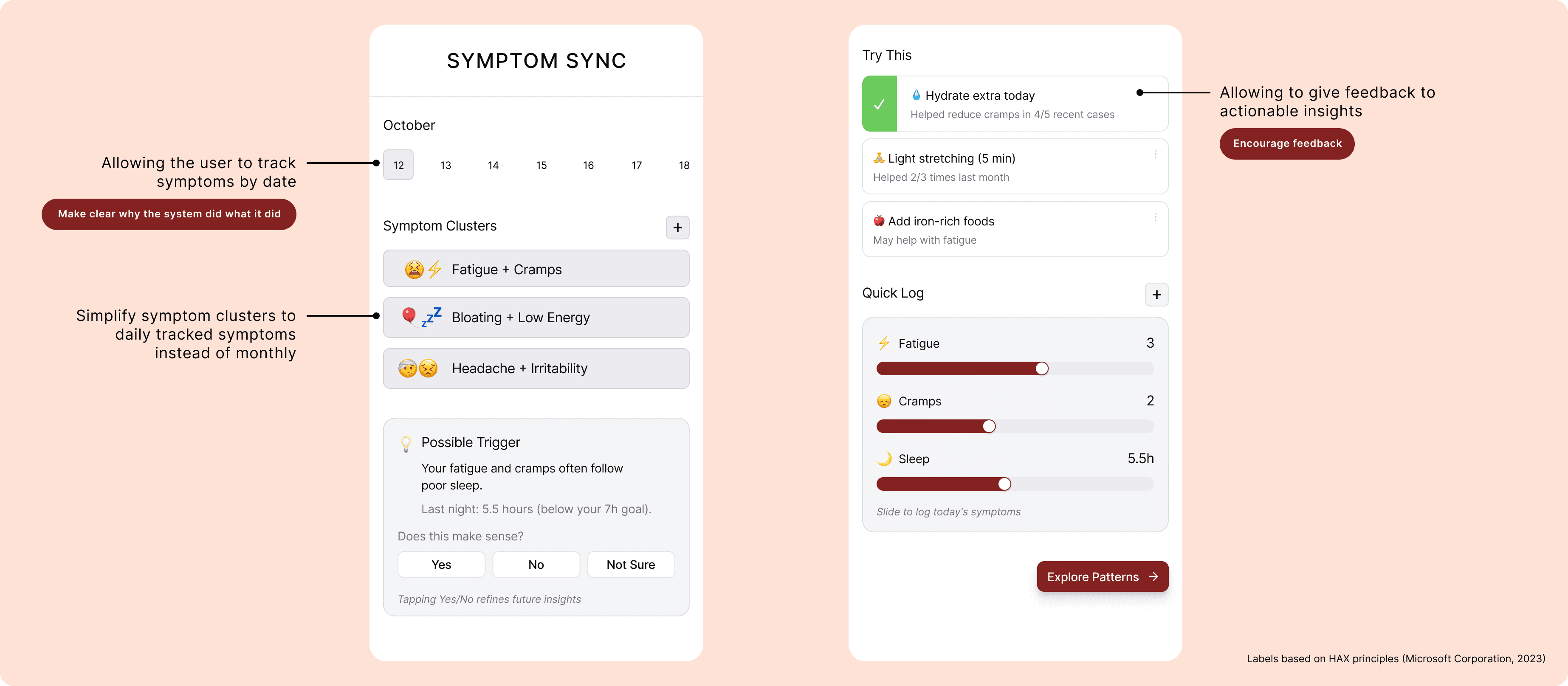
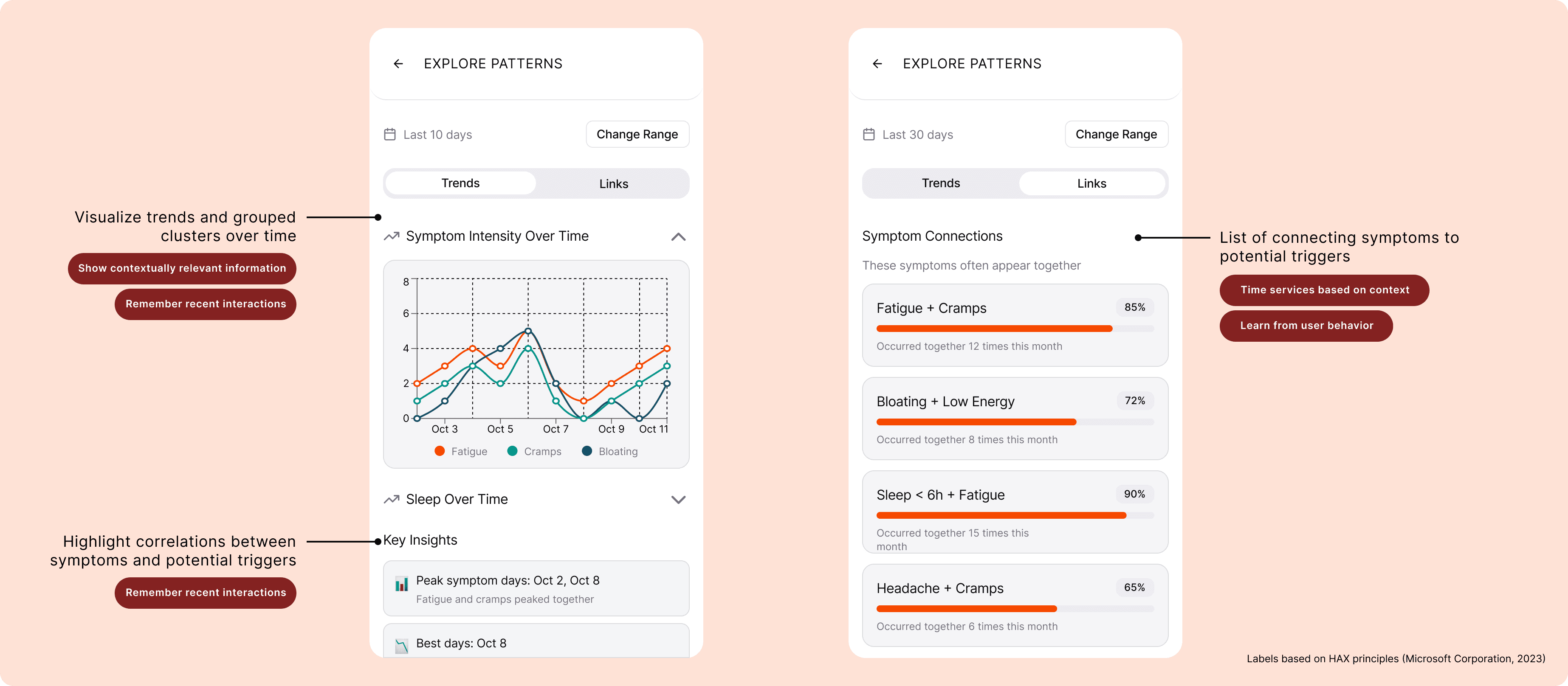
Symptom Sync is a menstrual health app concept that treats irregularity as normal. Instead of predicting a single “correct” cycle, it helps people spot links between symptoms, context and time using Symptom Clustering with AI hypotheses. The system groups related symptoms into patterns, suggests possible triggers such as stress or sleep changes, and offers small, concrete suggestions. Users can confirm or correct these, keeping control over what the app learns.
Outcome
The concept shows how a tracking tool can make irregular cycles a primary use case, turn scattered logs into understandable patterns and use AI transparently. In prototype walkthroughs, it was seen as more honest about uncertainty and easier to read at a glance than typical prediction‑driven period apps.