Qianhong Lin

The urban dataset recommender is a master's project in Data‑Driven Design that is currently moving from research and concept development into implementation. After defining the problem space and exploring how densification decisions are made today, I am now focused on building and refining a data‑driven tool for urban planners in Madrid.
Client:
Dark Matter Labs
My Role:
Data-Driven Product Designer
Timeline:
Dec 2025 - Jun 2026
Service Provided:
UX/UI Design, Ethical Design, Data studies, Data Science

Problem
Dark Matter Labs is a not‑for‑profit organisation working to transform urban systems by reshaping the underlying monetary, economic, governance, regulatory, and policy “dark matter” that drives development. In Madrid, overtourism, gentrification, and a growing housing crisis make densification a possible way to keep the city liveable and affordable, but only if its trade‑offs are carefully understood.
This project focuses on a data‑driven design problem: urban planners in Madrid need a user‑centred tool that can assess and compare the quality of multiple datasets and combine suitable data so that densification decisions become more transparent, reliable, and trustworthy.
Research & Insights
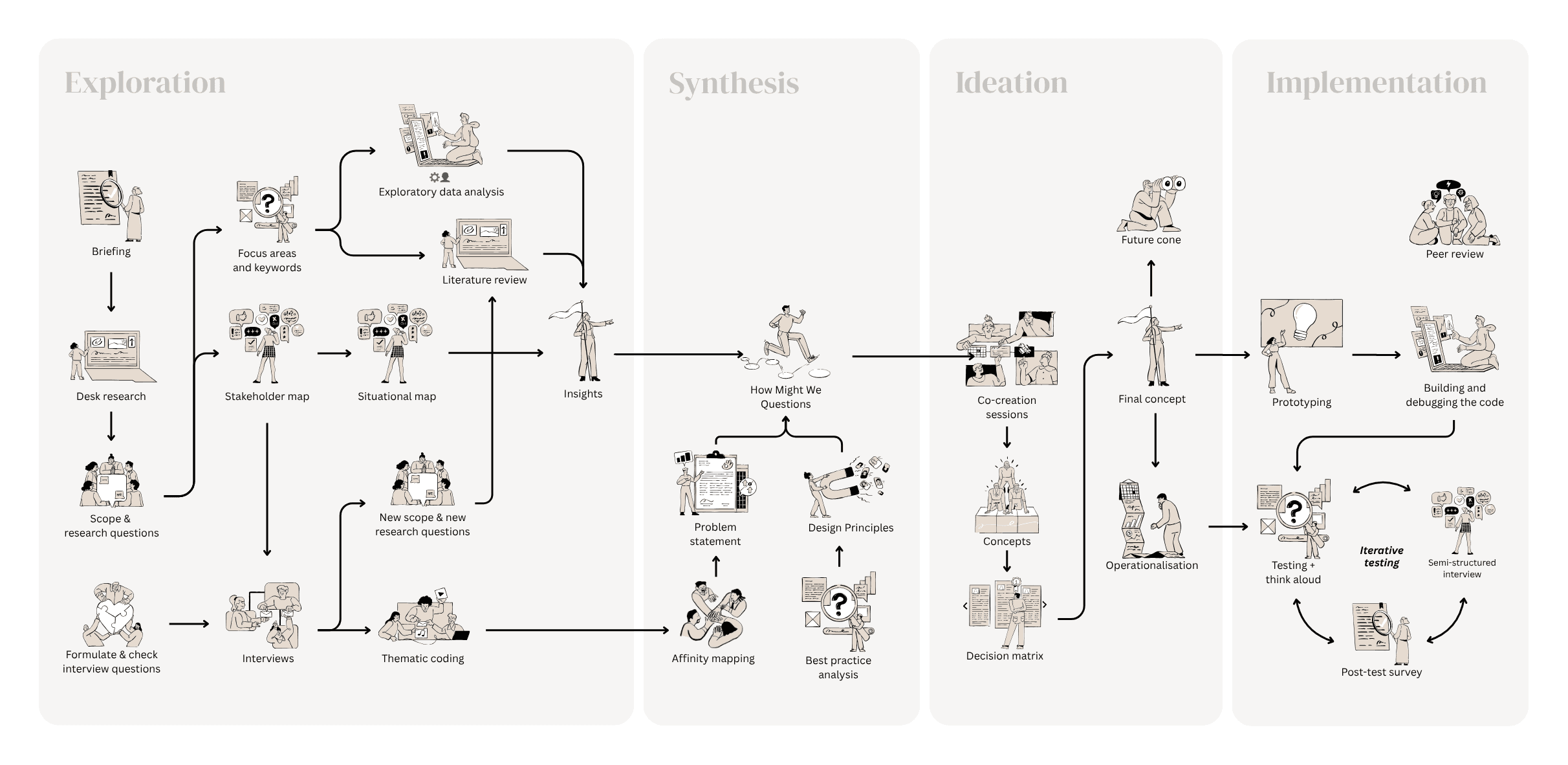
I approached the project using both the double diamond design process and the data‑driven design feedback loop, because together they balance open‑ended exploration with rigorous, iterative use of data. The double diamond helped me alternate between diverging (questioning assumptions, mapping stakeholders, surfacing tensions in densification) and converging (framing a clear problem and focusing on planners’ needs), while the data‑driven feedback loop kept attention on how data is collected, processed, and translated into actionable outputs for planners.
This work surfaced several key insights:
Data relevant to densification is abundant but scattered across tools
Many criteria and thresholds are tacit rather than shared
Data quality and coverage vary significantly by area
Planners need tools that support storytelling and explanation, not just analysis, so they can make the assumptions and trade‑offs in densification decisions explicit
Together, these insights directly shape how the prototype is defined, from the datasets it brings together to the ways it explains and qualifies the evidence behind each decision.
Solution
I defined and designed a data‑driven dataset recommender that helps urban planners in Madrid assess and compare dataset quality for densification questions and explain their choices transparently.
Concept
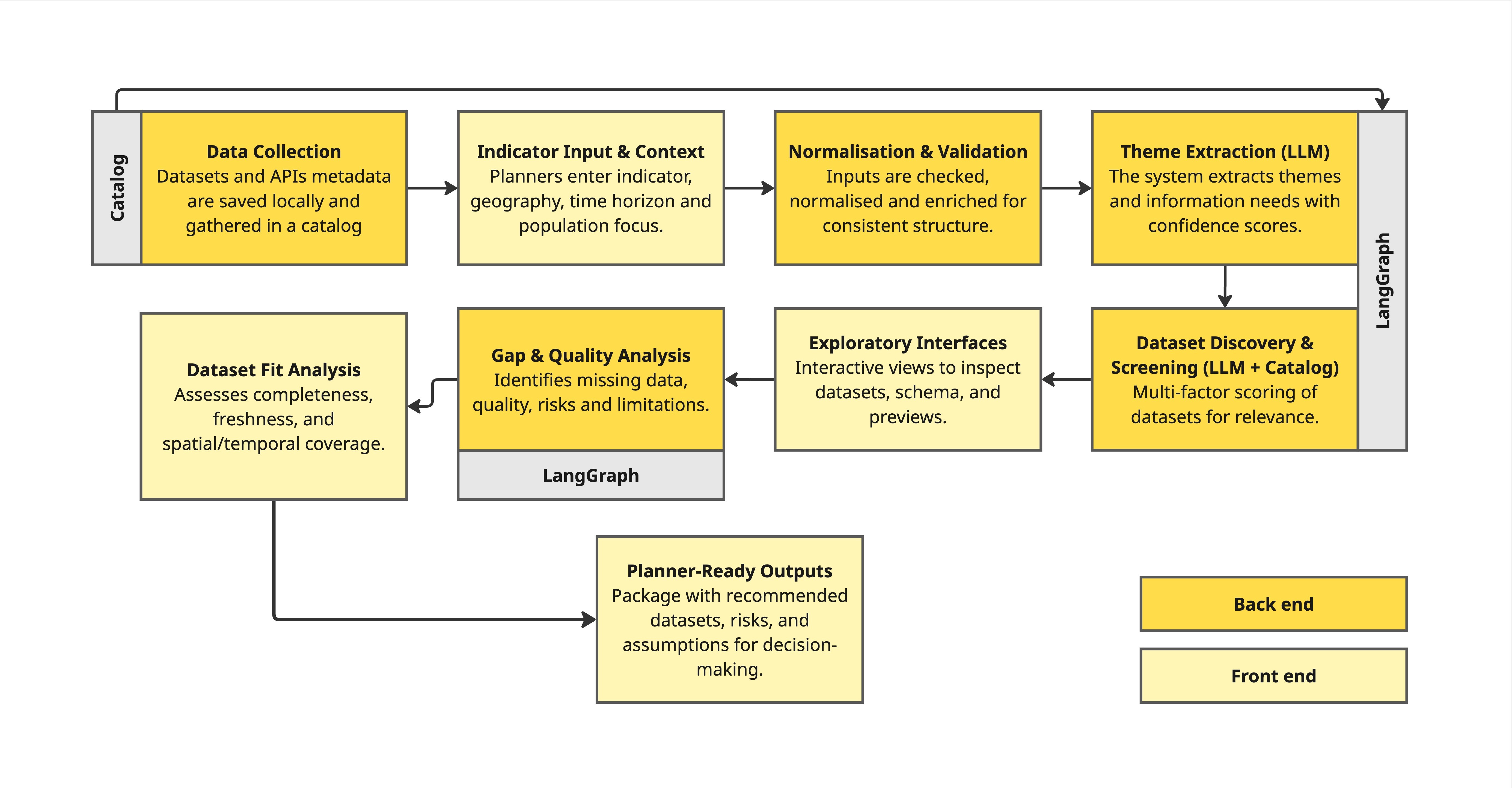
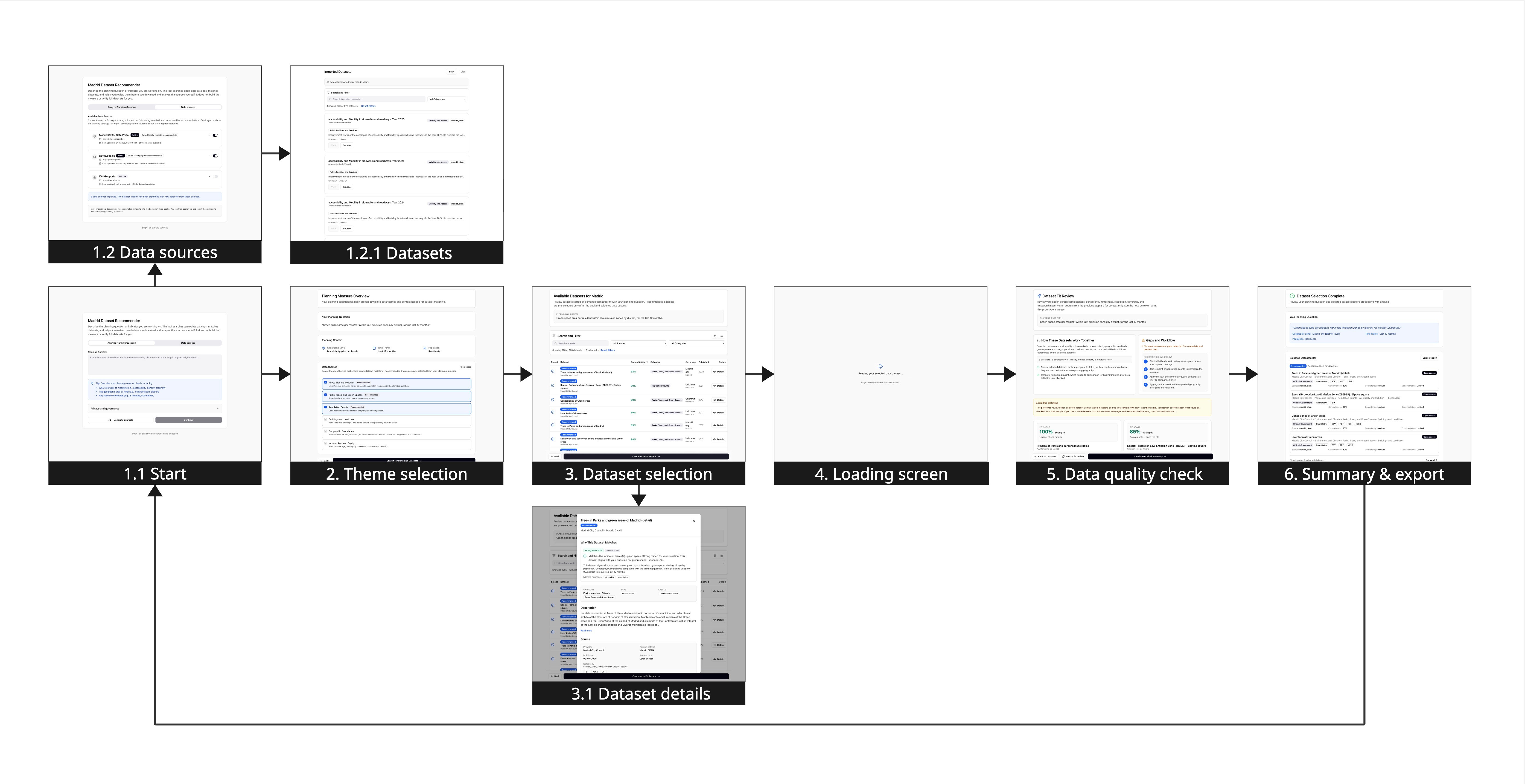
The assistant starts from a planner’s question about a place or proposal and then helps them find, compare and combine relevant datasets. It surfaces key themes, links them to data from open portals and other sources, and shows a simple breakdown of data quality instead of a single opaque score, so planners can see where evidence is strong or weak. For each suggested dataset, a short explanation clarifies why it was recommended, what its main strengths and limitations are, and what trade‑offs it introduces. Planners can then export a clear summary of which datasets they used, how these were assessed and what uncertainties remain, creating a reusable story they can share with colleagues, decision‑makers and communities when discussing densification and other urban regeneration questions.
Implementation
I first designed the assistant in Figma, then built an initial working prototype in Python:
The backend handles dataset processing, computation of quality metrics and AI‑based assistance.
The frontend focuses on an interactive UI with explanation views, dimensional scores and supporting text.
AI‑assisted coding tools like GitHub Copilot and automated tests helped speed up development, but human review remained central for:
curating and cleaning datasets,
defining and weighting quality metrics,
writing clear, accessible explanations for planners.
Outcomes
So far, the project has resulted in a working prototype that supports densification questions in Madrid by helping users compare data quality and select suitable datasets. Through testing with peers, experts, and proxy users, it has clarified which aspects of data quality matter most in practice, making it easier to discuss why certain datasets are chosen and where their limits are. More broadly, the project offers a clearer view of how data‑driven tools can make urban regeneration decisions more transparent by surfacing assumptions and treating uncertainty as a core part of the interaction rather than an afterthought.”
Reflection & Next Steps
This project has shown that data‑driven tools can make densification decisions more transparent, but it also has clear limitations. So far I have mainly tested with proxy users; to really understand how the assistant fits within urban governance, it will be essential to test and iterate with urban planners and decision‑makers in Madrid itself, in the context of real projects and organisational constraints. Future work should therefore focus on partnering with planners and communities in Madrid to see how the tool actually shapes discussions, trade‑offs, and accountability in practice, and to study how existing data gaps and biases might systematically advantage or disadvantage specific neighbourhoods or groups.