Qianhong Lin

Designing an AI‑powered recipe tool that turns messy, hard‑to‑follow recipes into clear, structured ones for home cooks. It breaks down ingredients and steps and lets people easily adjust recipes to different diets, serving sizes, and kitchen setups.
Client:
SousChef
My Role:
Data-Driven Product Designer
Timeline:
Mar 2026
Service Provided:
UX/UI Design, Ethical Design, Data studies, Data Science

Problem
Home cooks rely on recipes found across blogs, PDFs and screenshots, but these are often messy, inconsistent, and hard to adapt. SousChef, a cooking app that guides users step by step with visuals, voice and timers, wanted to move into a more AI‑driven phase. To do that, they needed a way to convert any ordinary recipe into a structured, SousChef‑ready format that could be reused across their ecosystem for search, personalization and future AI features.
Research
I analyzed recipes from a range of websites to understand how ingredients, instructions and metadata appear “in the wild”. I looked for missing times, vague or ambiguous wording, inconsistent units and formatting. This led me to frame the challenge as a data‑transformation problem: first define a clear, strict output schema for SousChef, then use LLMs plus validation and repair steps to reliably fit any messy recipe into that structure.
Solution
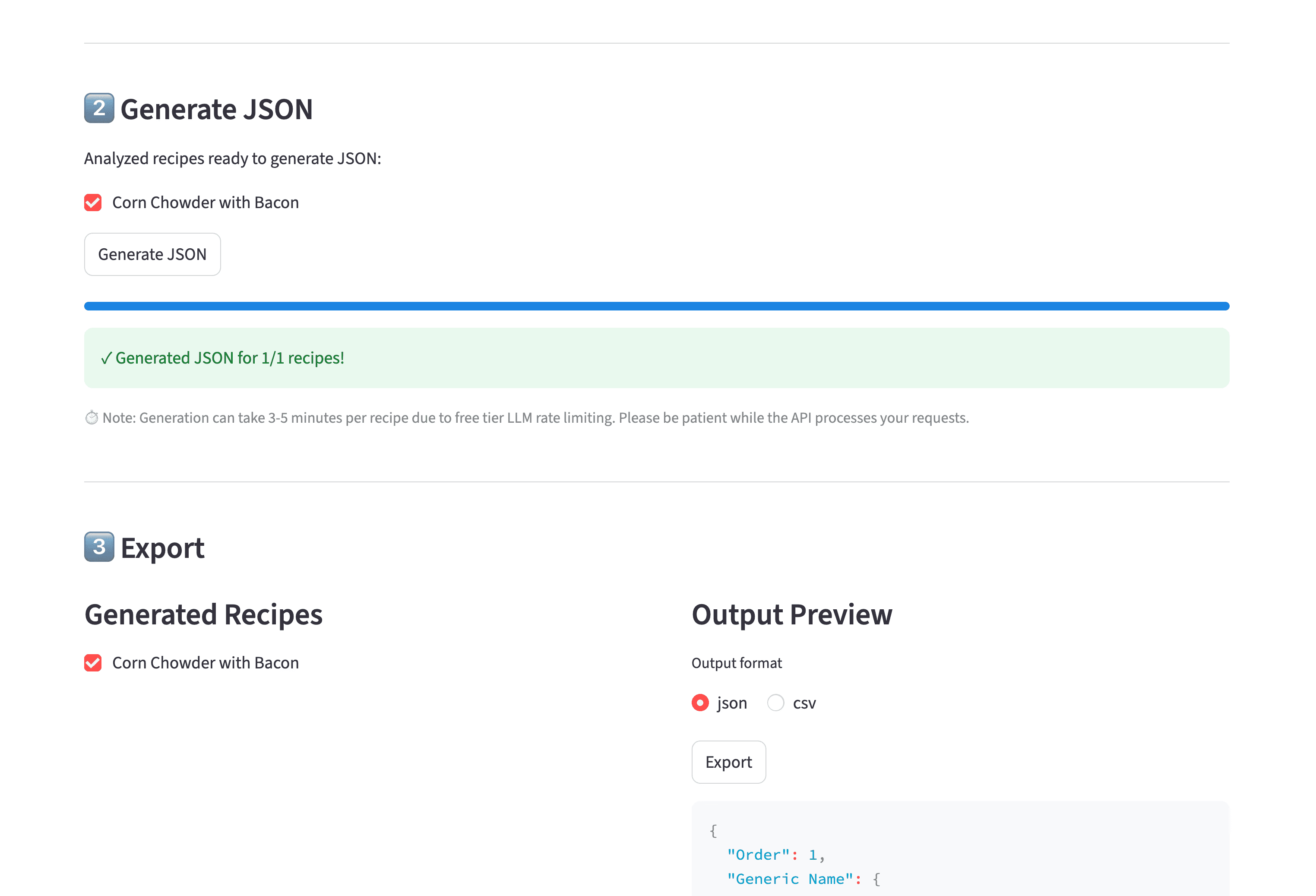
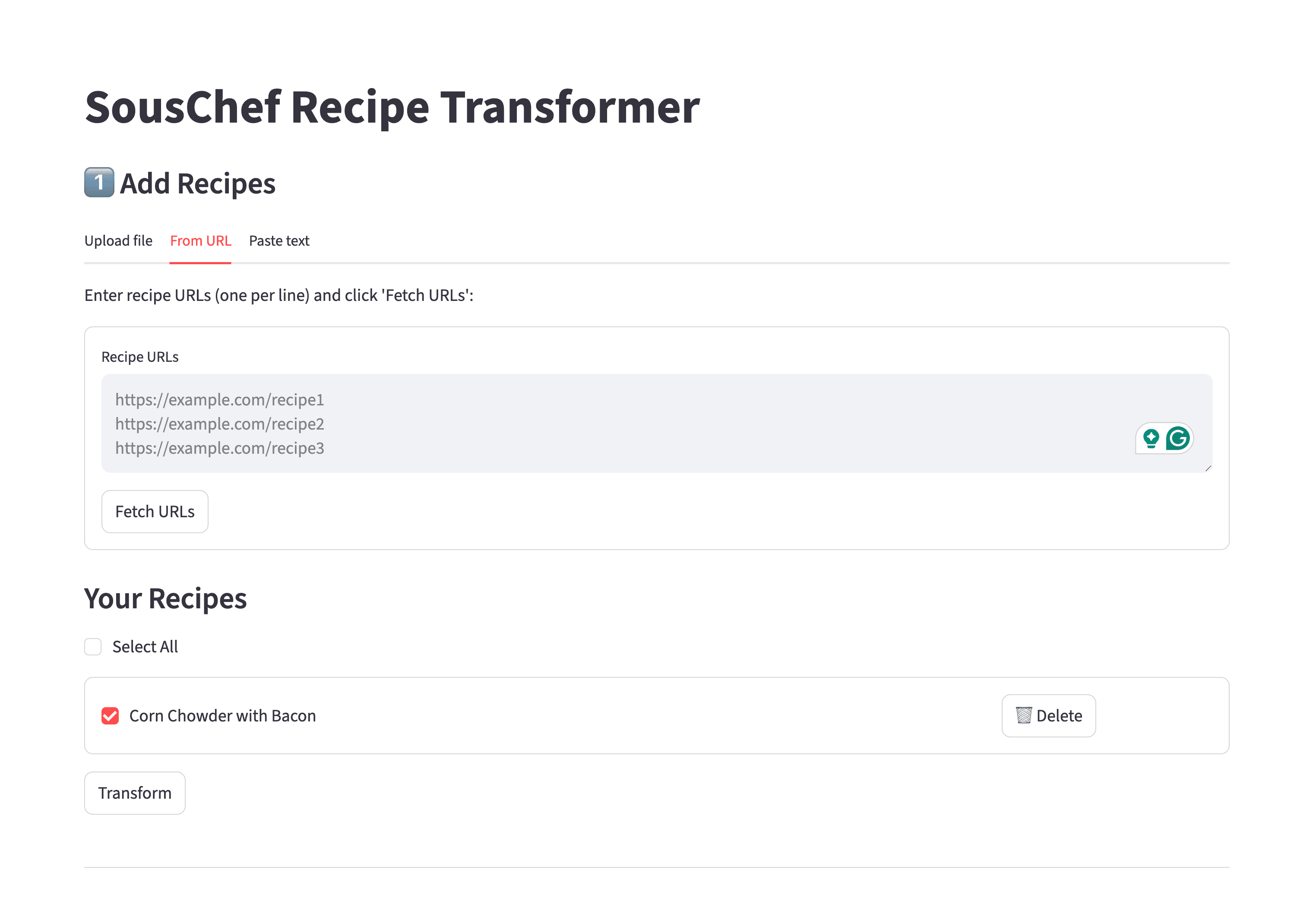
I designed an AI Recipe Transformer as a three‑step workflow inside Streamlit: add, transform, export. Users can upload files, paste text, or fetch recipes from URLs. The LLM then condenses and parses the recipe, validating it against SousChef’s output specifications and repairing issues where needed. Finally, users preview and download the structured outputs as JSON or CSV, ready for analysis tools and other SousChef features. Throughout the flow, I kept the interface simple enough for non‑technical home cooks, while enforcing a consistent data format in the background.
Outcome
The final prototype reliably converted diverse, unstructured recipes into consistent JSON and CSV, with schema enforcement and batch processing making it practical for real data work. Designing around LLMs strengthened my approach to data‑driven product design: I learned to treat the model as one part of a larger pipeline, adding safeguards against hallucinations, validation and repair loops, and feedback for latency. This improved both the robustness of the tool and the quality of SousChef’s structured recipe data for future AI‑powered experiences.